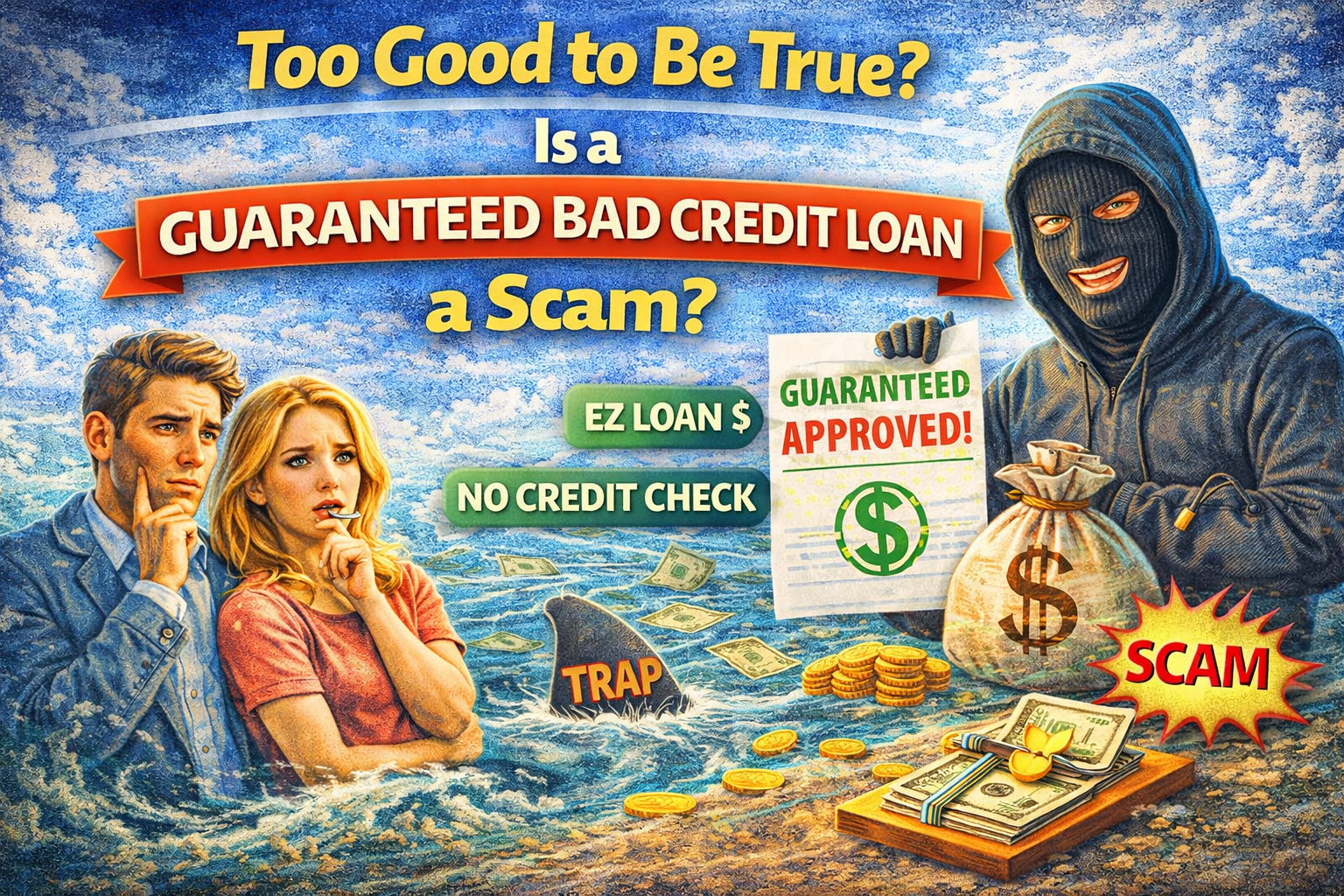
Desperate for cash? Don’t let a Guaranteed Bad Credit Loan trap you. Learn the red flags, avoid upfront fee scams, and protect your real estate assets today.
Table of Contents
I was grabbing a late lunch in Surat last Tuesday with a former client who was in a bit of a panic. He’d found a “fixer-upper” in a burgeoning residential neighborhood, but his finances were a mess from a previous business venture. He showed me a text message he’d received promising a “100% Guaranteed Bad Credit Loan” with no credit check and a massive payout within hours. “They say it’s guaranteed, even with my score,” he said, hope in his eyes. I had to be the one to burst his bubble: “If they’re guaranteeing it before they’ve even seen your bank statements, they aren’t looking to lend you money—they’re looking to take yours.”
It’s a heart-wrenching scenario I see all too often in the real estate world. When you are trying to secure a down payment or fund urgent structural repairs to save a deal, desperation can cloud your judgment. In 2026, the lending landscape is more digital and faster than ever, which unfortunately means scammers have gotten a lot more sophisticated.
The phrase Guaranteed Bad Credit Loan is designed to target people at their most vulnerable. But here is the hard truth from someone who’s been in the trenches of the housing market for years: legitimate lending is based on risk assessment. If a lender “guarantees” approval without assessing that risk, you aren’t looking at a financial lifeline; you’re looking at a red flag.
The Myth of the “Guarantee” in Professional Lending
Let’s be real for a second. No legitimate financial institution—whether it’s a big-box bank or a local credit union—can guarantee a loan upfront. Lending is a business of probability. A lender needs to know that you have the cash flow to repay what you borrow.
When you hear the term Guaranteed Bad Credit Loan, it usually implies that your credit score, income, and employment history don’t matter. In the professional real estate niche, we know that even “hard money” lenders, who are far more flexible than banks, still require an appraisal of the property and a look at your exit strategy. If a “lender” tells you that your financial past is irrelevant, they are likely ignoring the rules set by the Federal Trade Commission (FTC) or the Reserve Bank of India (RBI).
Red Flag #1: The Upfront Fee Trap
This is the oldest trick in the book, yet people still fall for it because the scammers use clever names. They might call it an “insurance fee,” a “processing charge,” or a “collateral deposit.” They tell you that because you have poor credit, you need to pay ₹5,000 or ₹10,000 upfront to “secure” your Guaranteed Bad Credit Loan.
Here is the golden rule: Legitimate lenders never ask for money before you get your money. Any actual processing fees are deducted from the loan amount itself or added to the total balance you repay over time. If they ask you to send money via a wire transfer, a prepaid debit card, or a crypto wallet to “unlock” your funds, hang up the phone. You are being scammed.
Red Flag #2: No Interest in Your History
If you’re applying for a Guaranteed Bad Credit Loan and the person on the other end doesn’t ask for your recent pay stubs, bank statements, or proof of residence, be very afraid. Even subprime lenders who specialize in “bad credit” still want to see that you have a job.
In the rental market, property managers perform background checks for a reason—they need to know the tenant can pay the rent. Lending is no different. A “lender” who doesn’t care about your ability to pay back a Guaranteed Bad Credit Loan isn’t planning on you paying it back; they’re planning on disappearing with your “upfront fee.”
Red Flag #3: High-Pressure Tactics and “Limited Time” Offers
“This offer expires in two hours!” or “We have five other people waiting for this Guaranteed Bad Credit Loan!” These are classic psychological triggers. Scammers want you to act on adrenaline rather than logic.
In a real real estate transaction, things take time. There are disclosures to read, interest rates to compare, and contracts to review. If a lender is rushing you to sign a document or send a deposit for a Guaranteed Bad Credit Loan without letting you read the fine print, they are hiding something. According to the latest OECD Consumer Finance Risk Monitor, high-pressure digital lending is one of the top fraud risks facing consumers in 2026.
The Dangers of Unsecured Digital “Loan Apps”
We’ve seen a surge in “instant” loan apps recently. While some are legitimate, many are “ghost apps” designed to harvest your personal data. They promise a Guaranteed Bad Credit Loan, but once you grant the app permission to access your contacts and photos, they use that information to harass you or steal your identity.
Always check if the lender is a registered Non-Banking Financial Company (NBFC) or a licensed bank in your jurisdiction. If you can’t find a physical office address or a verified registration number, don’t download the app.
How to Find a Legitimate Loan When Your Credit is Bruised
If your credit is in the gutter, you don’t have to turn to scammers. There are actual, legal paths to getting the capital you need for that residential property flip or emergency repair.
- Credit Unions: These are member-owned and often more willing to look at your “story” rather than just your score.
- Secured Personal Loans: If you have a vehicle or a small piece of land, you can use it as collateral. This isn’t a “guarantee,” but it makes you a much safer bet for a real lender.
- Peer-to-Peer (P2P) Lending: Platforms that connect individual investors with borrowers can sometimes be more flexible than traditional banks.
For a deeper look at the legal definitions of “predatory lending,” Wikipedia’s entry on Predatory Lending provides a solid foundation on what is—and isn’t—legal in the world of high-interest credit.
FAQ Section
Is every Guaranteed Bad Credit Loan a scam? In the literal sense, yes. No legitimate lender can “guarantee” a loan before seeing your financial data. While some lenders specialize in high-risk (subprime) loans, they still perform a basic check on your income and identity.
What should I do if I already paid an upfront fee for a Guaranteed Bad Credit Loan? Contact your bank immediately to see if the transaction can be reversed. File a report with your local police and notify your national consumer protection agency. The faster you act, the better the chance of stopping further identity theft.
Can I get a home loan with bad credit in 2026? Yes, but it won’t be “guaranteed.” You will likely need a larger down payment, a co-signer, or you may need to look at government-backed programs like FHA loans (in the US) or specific PMAY schemes (in India) that offer more flexibility.
How can I tell if a lender’s website is real? Check the URL for “https” and the padlock icon. More importantly, look for a physical address and a phone number you can actually call. If the only way to contact them is through a WhatsApp message or a generic Gmail address, stay away.
Do “No Credit Check” loans exist? They do, but they are usually “Payday Loans” with interest rates that can exceed 400%. These are not “guaranteed” in the way scammers promise, and they can lead to a devastating cycle of debt that can cost you your home or your car.
Conclusion
The 2026 housing market is tough enough without falling victim to financial predators. If you are struggling with a low credit score, remember that time and consistent effort are your best allies. A Guaranteed Bad Credit Loan might look like a shortcut, but it’s almost always a dead end that leaves you in a worse position than where you started.
Protect your personal information as fiercely as you protect your real estate equity. If a deal feels too easy, it probably is. Stay skeptical, do your homework, and only work with lenders who are transparent about their fees and their process.
