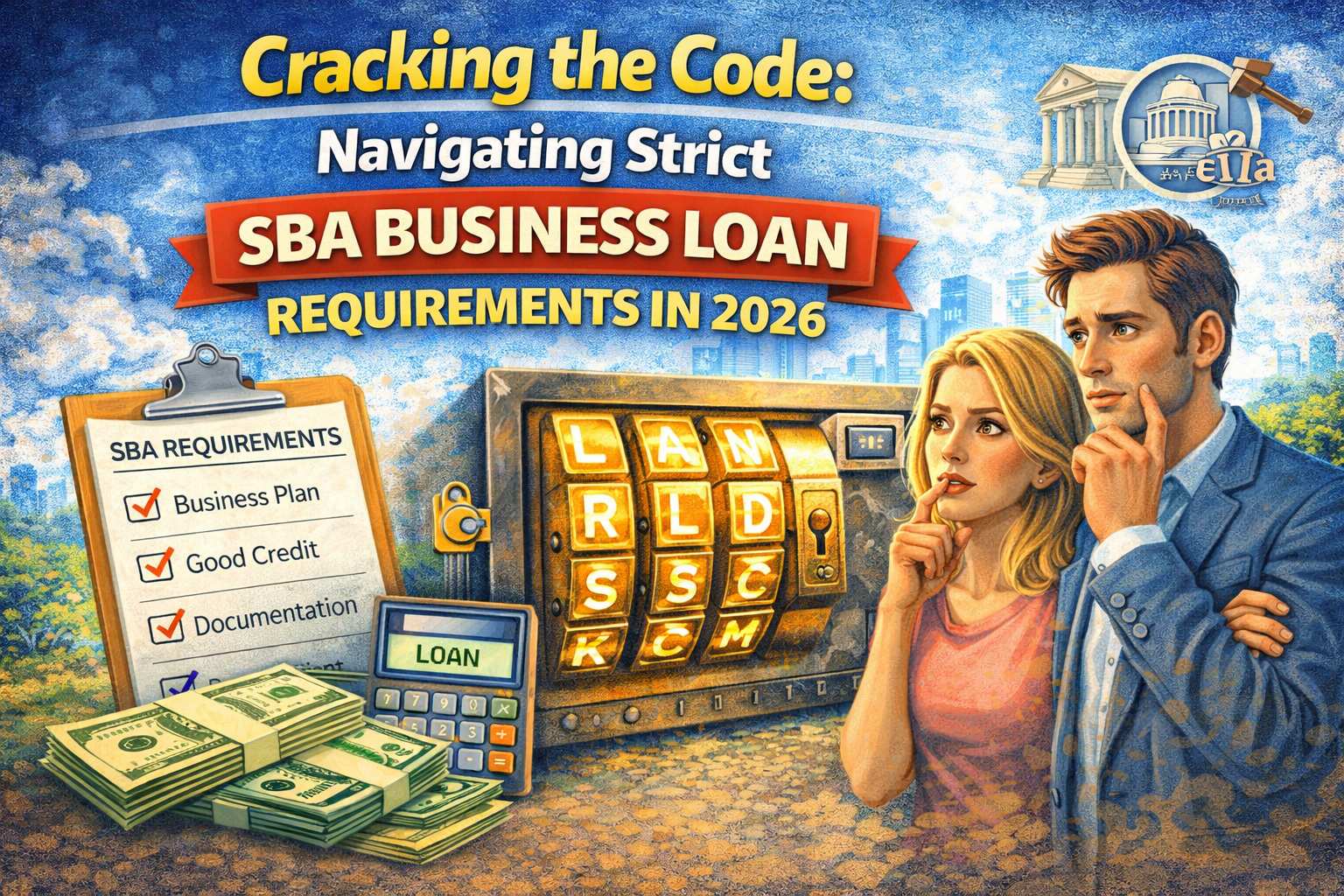
Don’t let the paperwork stop your growth. Master the SBA Business Loan Requirements to secure low-interest capital for your real estate or service business.
Table of Contents
I was grabbing a coffee in Surat last week with a developer friend who is currently trying to pivot his residential flipping business into long-term commercial real estate. He’s got the vision, he’s got the hustle, and he’s found a perfect multi-use building that just needs a bit of love. But when he started looking at the SBA Business Loan Requirements, he looked like he’d just seen a ghost. “It feels like they want to know what I ate for breakfast in 2014,” he joked, though I could tell the mountain of paperwork was actually stressing him out.
He isn’t alone. For many small-to-mid-sized companies, the Small Business Administration (SBA) is the holy grail of financing. The interest rates are lower, the terms are longer, and the down payments are much more manageable than traditional bank loans. But there is a trade-off. Because the government is essentially “co-signing” for you, the SBA Business Loan Requirements are famously meticulous.
If you are a growing company—especially one operating in the fast-moving real estate niche—you have to treat the application process like a professional project. You can’t just wing it. If you walk into a lender’s office unprepared, you’re just wasting everyone’s time. But if you understand the logic behind these strict rules, you can navigate them and come out with the capital you need to scale.
The Core Foundations of SBA Business Loan Requirements
At its heart, the SBA wants to ensure that you are a legitimate business that can actually repay the debt. They aren’t in the business of high-risk gambling. The baseline SBA Business Loan Requirements start with your character and your history. They will check your personal credit score (ideally 680 or higher), your criminal background, and whether you’ve ever defaulted on a federal debt (like a student loan).
However, the real scrutiny begins with your cash flow. Lenders are going to perform a deep dive into your last three years of federal tax returns. They aren’t just looking for revenue; they are looking for “add-backs” and consistent profitability. If your business bank account looks like a roller coaster, you might need to wait a few months to stabilize your deposits before you can meet the SBA Business Loan Requirements.
Why Real Estate Firms Love the 504 and 7(a) Programs
In our industry, we are always thinking about physical assets. If you are looking to buy an office building for your brokerage or a warehouse for your property management fleet, you’ll likely be looking at the SBA 504 or 7(a) programs.
The SBA Business Loan Requirements for the 504 program are specifically geared toward “owner-occupied” real estate. This means your business must occupy at least 51% of the building. It’s a fantastic way to stop paying a landlord and start building your own equity. I’ve seen boutique firms use these loans to move out of high-rent retail spaces and into buildings they actually own, essentially securing their company’s retirement in one move.
Navigating the “Collateral” Conversation
Even though the SBA guarantees a large portion of the loan, they still want you to pledge what you have. This is one of the more misunderstood SBA Business Loan Requirements. If your business doesn’t have enough assets to fully secure the loan, the SBA won’t necessarily reject you, but they will likely require a lien on your personal residence if you have significant equity.
For many real estate investors, this is a “heart-in-the-throat” moment. But remember, the SBA only takes your house if the business fails and the business assets don’t cover the debt. It is a serious commitment, and it underscores why your business plan needs to be ironclad before you even start looking at the SBA Business Loan Requirements.
The Importance of a Modern Business Plan
The SBA doesn’t just want to know how much money you made last year; they want to know how you’re going to make it for the next ten. Your business plan is a vital part of the SBA Business Loan Requirements. It needs to include:
- Market Analysis: Who are your competitors in the local housing market?
- Marketing Strategy: How are you getting new residential properties or commercial listings?
- Management Team: Who is actually running the day-to-day operations?
- Financial Projections: Can you prove you’ll have the cash to make the monthly payments?
According to data often discussed by the National Association of Realtors (NAR), companies with documented, systemized operations have a much higher success rate in securing institutional funding. A professional business plan proves you aren’t just an agent with a license—you are a CEO with a strategy.
Common Pitfalls That Stall the Process
I’ve seen the SBA Business Loan Requirements trip up even the most seasoned entrepreneurs because of simple, avoidable mistakes. The most common? Inconsistent data. If your tax returns say one thing and your profit and loss (P&L) statement says another, the underwriter is going to hit the “pause” button immediately.
Another major hurdle is the “Debt Service Coverage Ratio” (DSCR). Generally, SBA Business Loan Requirements dictate that your business net income should be at least 1.15 to 1.25 times the amount of your total annual debt payments. If you’re too “lean” on paper because you’re writing off every single lunch and car wash, you might actually be hurting your ability to borrow.
For a deeper dive into the legal history of how these federal guarantees were created to support local economies, Wikipedia’s entry on the Small Business Administration offers fantastic context. It explains why these strict rules exist to protect taxpayer funds while stimulating growth.
The 2026 Shift: Digital Documentation
As we move through 2026, the SBA Business Loan Requirements haven’t necessarily changed in spirit, but they have changed in execution. Everything is digital now. You need to have your “Data Room” ready to go. This means clean PDFs of:
- Business and personal tax returns (3 years).
- Personal financial statements for all owners with 20% or more stake.
- Business debt schedule.
- Lease agreements or property management contracts.
If you’re disorganized, the SBA Business Loan Requirements will eat you alive. But if you use a professional CRM and keep your accounting software synced, you can provide these documents in minutes rather than days. As noted by the Consumer Financial Protection Bureau (CFPB), being an informed and organized borrower is your best defense against predatory lending and bureaucratic delays.
FAQ Section
What is the minimum credit score for SBA Business Loan Requirements? While the SBA doesn’t set a hard minimum, most lenders look for a personal credit score of 680 or higher. If your score is lower, you may still qualify by showing exceptionally strong business cash flow or significant collateral.
How long does it take to get approved once I meet the SBA Business Loan Requirements? The process usually takes between 60 and 90 days. Using an “SBA Preferred Lender” can speed this up, as they have the authority to make final credit decisions on the SBA’s behalf without sending everything to a federal regional office.
Can I use an SBA loan to buy an investment property? Generally, no. SBA Business Loan Requirements state the property must be at least 51% owner-occupied for existing buildings and 60% for new construction. It is designed for businesses to own their workspace, not for passive real estate investing.
Do I need to be a US citizen to meet SBA Business Loan Requirements? You must be a US citizen or a “Lawful Permanent Resident” (Green Card holder). Businesses must also be physically located and operating within the United States or its territories.
What is a personal guarantee in the context of an SBA loan? Every owner with at least a 20% stake in the company must sign a personal guarantee. This means that if the business defaults, the owners are personally responsible for repaying the debt, which is a key part of the SBA Business Loan Requirements.
Conclusion
Securing a government-backed loan is a marathon, not a sprint. The SBA Business Loan Requirements are undeniably tough, but they are designed to build resilient, successful companies. When you go through this process, you are essentially performing a “health check” on your entire business model.
By staying organized, maintaining a clean credit profile, and having a clear vision for your company’s growth, you can turn these requirements into a roadmap for success. Whether you’re buying your first office building or expanding your property management empire, the SBA can be the engine that gets you there.
