
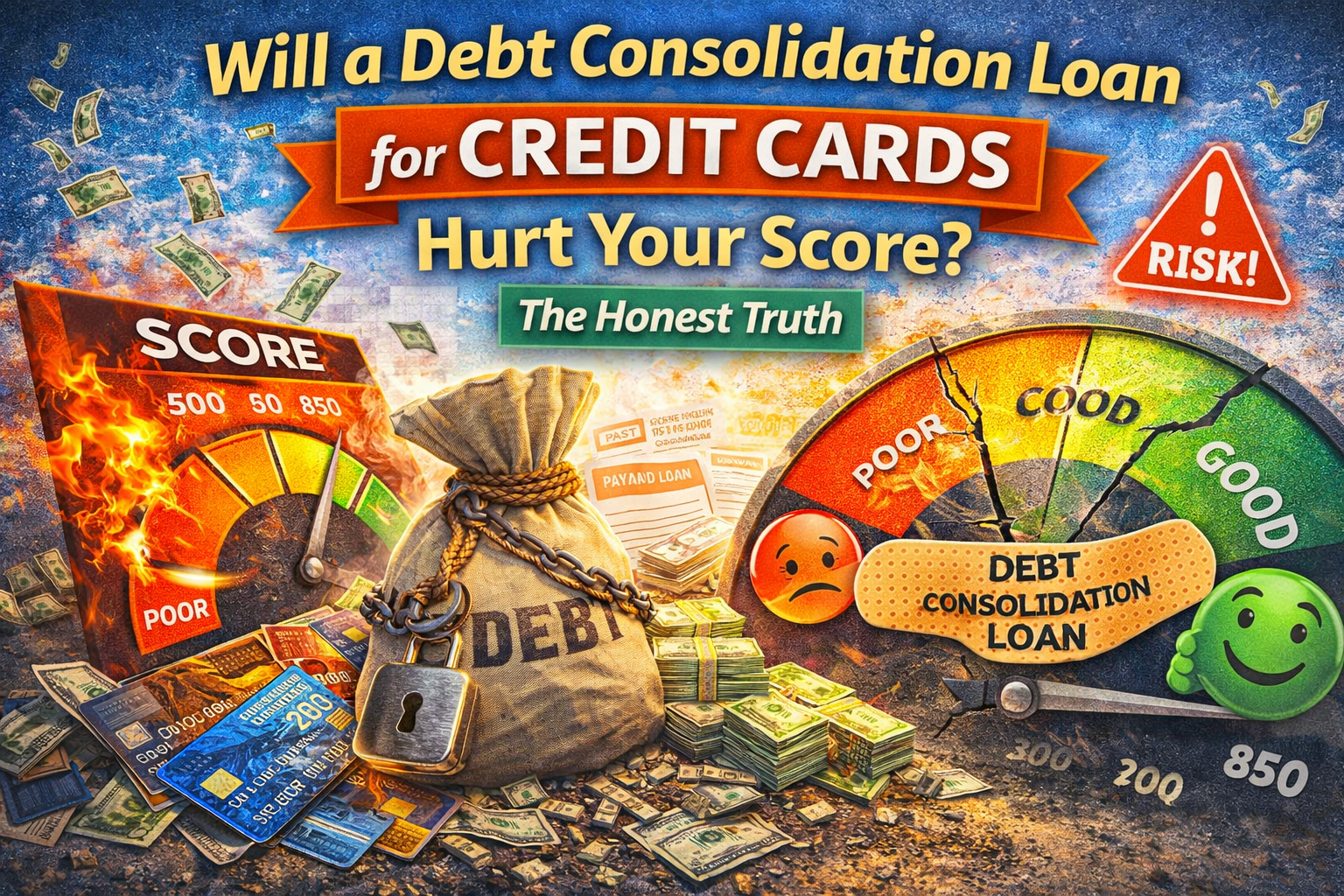
Planning to buy a home? Discover if a Debt Consolidation Loan for Credit Cards helps or hurts your credit score and your chances of mortgage approval in 2026.
Table of Contents
I was grabbing a late lunch in Surat last week with a young couple who are desperate to move out of their cramped apartment and into a proper residential property. They’ve been saving for a down payment for two years, but they’ve been carrying about ₹8 Lakhs in high-interest revolving debt across four different cards. Every time they make progress on their savings, the interest charges seem to eat their lunch. They asked me a question I hear at least once a week: “Should we get a Debt Consolidation Loan for Credit Cards, or will that tank our credit score right before we apply for a mortgage?”
It’s a valid fear. In the real estate business, your credit score is essentially your professional resume. If it’s bruised, you pay more for everything—from your homeowners insurance to your actual interest rate. The idea of taking out more debt to pay off debt feels counterintuitive, almost like trying to dig your way out of a hole.
But here is the reality of the 2026 housing market: lenders don’t just look at how much you owe; they look at how you owe it. Carrying maxed-out plastic is a major red flag for underwriters. When used correctly, a Debt Consolidation Loan for Credit Cards can actually be the secret weapon that polishes your financial profile just in time for a bank to say “yes” to your dream home.
The Immediate Impact: A Short-Term Dip
Let’s be completely honest—the moment you apply for a Debt Consolidation Loan for Credit Cards, your score will likely take a small, temporary hit. This is because the lender will perform a “hard inquiry” to check your creditworthiness. Most people see a drop of about five to ten points.
In the grand scheme of a real estate transaction, that is a tiny ripple in the pond. If you are six months away from touring luxury listings, this dip will have already bounced back. The real danger isn’t the inquiry; it’s the behavior that follows. If you use a Debt Consolidation Loan for Credit Cards to clear your balances and then immediately go out and max those cards out again, you aren’t just hurting your score—you’re sabotaging your future homeownership.
How Consolidation Heals Your Credit Utilization
The single biggest reason a Debt Consolidation Loan for Credit Cards can actually boost your score is something called credit utilization. This is the percentage of your available credit that you are actually using. If you have a ₹10 Lakh limit across your cards and you owe ₹9 Lakhs, your score is being dragged down by a 90% utilization rate.
When you take out a Debt Consolidation Loan for Credit Cards, you are moving that debt from “revolving” (credit cards) to “installment” (a personal loan). Suddenly, your credit card balances show as zero. To the credit bureaus, your utilization has plummeted from 90% to 0% overnight. I’ve seen clients’ scores jump by 40 to 60 points in a single billing cycle after securing a Debt Consolidation Loan for Credit Cards. For a buyer on the edge of qualifying for a better mortgage tier, that jump is worth its weight in gold.
Improving Your Debt-to-Income (DTI) Ratio
When you sit down with a mortgage lender, they are going to perform a math problem called the Debt-to-Income ratio. They add up all your monthly minimum payments and compare them to your gross income. High-interest credit cards often have high minimum payments because the interest rates are astronomical.
By using a Debt Consolidation Loan for Credit Cards, you are usually securing a much lower interest rate and a fixed monthly payment. Often, the monthly payment on one consolidation loan is significantly lower than the combined minimums of five different credit cards. This improves your DTI, which might allow you to qualify for a larger loan amount or a better residential property in a nicer neighborhood.
According to data often discussed by the National Association of Realtors (NAR), DTI is one of the primary reasons mortgage applications are rejected. Using a Debt Consolidation Loan for Credit Cards to streamline those monthly outflows is a sophisticated way to manage your “borrowing power” before you start shopping.
The Pitfall: Closing Your Old Accounts
Here is a piece of advice that many people get wrong. Once you use your Debt Consolidation Loan for Credit Cards to pay off your plastic, do not—I repeat, do not—close those credit card accounts.
A large part of your credit score is based on the “age of accounts.” If you close a card you’ve had for ten years, you are effectively shortening your credit history. Keep the accounts open, hide the physical cards in a drawer, and let the zero balance work its magic on your score. If you close them, you reduce your total available credit, which could actually hurt your utilization rate, even after getting a Debt Consolidation Loan for Credit Cards.
For a deeper look into the legal protections and the “Truth in Lending” requirements that every legitimate lender must follow, Wikipedia’s entry on Debt Consolidation offers a solid foundation. It explains why moving from high-interest revolving debt to a structured loan is a standard move for financial recovery.
Real-Life Example: The Fixer-Upper Flip
I worked with a real estate investor recently who wanted to move from residential property into the commercial real estate market. He had about ₹15 Lakhs in credit card debt used for various renovations. His score was stuck in the mid-600s because of high utilization.
He secured a Debt Consolidation Loan for Credit Cards with a 4-year term. Within three months, his score climbed to 720. This allowed him to secure a commercial mortgage with an interest rate 1.5% lower than he was previously quoted. Over the life of his twenty-year commercial loan, that ₹15 Lakhs Debt Consolidation Loan for Credit Cards saved him nearly ₹50 Lakhs in total interest. That is the power of strategic debt management.
As noted by the Consumer Financial Protection Bureau (CFPB), being an informed borrower means looking at the “total cost of credit.” If a Debt Consolidation Loan for Credit Cards saves you ₹10,000 a month in interest, that is ₹10,000 you can put toward your future property taxes or home insurance.
Choosing the Right Lender in 2026
You shouldn’t just take the first offer that pops up in your social media feed. If you’re looking for a Debt Consolidation Loan for Credit Cards, you need to shop around.
- Credit Unions: Often offer the lowest rates for a Debt Consolidation Loan for Credit Cards because they are member-owned.
- Online Lenders: They are built for speed and can often fund a Debt Consolidation Loan for Credit Cards into your account within 24 hours.
- Personal Loans from Your Bank: If you have a long-standing relationship, they might offer a “loyalty rate” that beats the open market.
Always check for “origination fees” and “prepayment penalties.” The best Debt Consolidation Loan for Credit Cards is one that allows you to pay it off early without a fee if you happen to get a big year-end bonus or a commission check from a property sale.
FAQ Section
Will a Debt Consolidation Loan for Credit Cards hurt my credit score long-term? Generally, no. While you might see a small dip from the hard inquiry, the long-term impact of lowering your credit utilization and creating a history of consistent installment payments usually results in a significantly higher credit score.
Can I get a mortgage immediately after taking a Debt Consolidation Loan for Credit Cards? It is usually best to wait at least three to six months. This gives the credit bureaus time to reflect your new zero balances on your credit cards and shows the mortgage underwriter that you can handle the new Debt Consolidation Loan for Credit Cards payments reliably.
What is the minimum credit score needed for a Debt Consolidation Loan for Credit Cards? Most lenders prefer a score of 660 or higher to offer competitive interest rates. However, there are “subprime” options for those with lower scores, though the interest rates on a Debt Consolidation Loan for Credit Cards in that category will be higher.
Should I consolidate my credit cards if I am planning to sell my house? If you are planning to buy a new residential property after you sell, then yes. Cleaning up your debt profile with a Debt Consolidation Loan for Credit Cards before you apply for your next mortgage will put you in a much stronger negotiating position with lenders.
Are there hidden fees in a Debt Consolidation Loan for Credit Cards? Some lenders charge an “origination fee” (usually 1-5% of the loan amount). Always ask for the APR (Annual Percentage Rate), which includes these fees, so you can see the true cost of your Debt Consolidation Loan for Credit Cards compared to your current credit card interest.
Conclusion
The 2026 housing market doesn’t reward those who wait; it rewards those who prepare. If you are drowning in high-interest plastic, a Debt Consolidation Loan for Credit Cards isn’t just a way to simplify your life—it’s a strategic real estate move. It’s about taking control of your financial narrative before a bank does it for you.
By lowering your utilization, improving your DTI, and creating a predictable monthly budget, you are clearing the path to homeownership. Don’t let your credit cards hold your future residential property hostage. Research your options, secure a fair Debt Consolidation Loan for Credit Cards, and start focusing on the only debt that truly builds wealth: your future mortgage.
